
Beginning January 2011, individuals that have been suspected of having a concussion
in the field are now brought into a forward operating base
where there is--it's a rest area.
It's really just a small clinic to begin with--
just to be observed.
And they're put under rest,
and they're required to be evaluated by a medical personnel.
And they're given a particular test--
a neuropshychological test
just to determine if they are okay or not.
And they stay there until they're clear.
If they have more problems, then they're brought back to a larger base
like a Fort Leatherneck, or to Kabul, or Kandahar.
And then they're evaluated by a full neurologist,
and they may have some imaging that is being done.
In about 75% to 80% of the individuals
throughout the world that have a concussion
the event's clear within 7 to 14 days.
In about 10% to 15% you have concussion symptoms
and pathology that lingers for months.
We don't know why that is the case.
We think it's because of a certain gene
or a combination of genes that are expressed in a certain way--
and some of my colleagues feel passionate about that that's the case,
and that may be the case, but we're not sure.
And then their rifle is taken away--
everything is removed from them in terms of their stimulus.
They're allowed to communicate with home
through the internet,
but they're required to have sleep and rest--
and they're not allowed to have anymore of the Red Bull--
we call it Red Bull here.
There in the military they have a special name for their canisters
that they can get in the PX.
And so they reduce that stimulus,
and get them back to sleep again.
And it takes about 6 days--
and they're always around their unit--
that's what's nice about these forward operating bases
and these rest areas is their unit is still there
they still see the guys, and they can still talk with them,
but they're just not allowed out of the wire.
And then after that, now they're allowed out of the wire--
they're allowed to go back out.
And the impact of that, in my professional opinion,
is going to be enormous.
Because, I think what we are going to be able to do
is protect them from acquiring things like post traumatic stress,
which is at a high comorbidity with traumatic brain injury.
We used to think that it was the event that the injury occurred
that caused the post traumatic stress--
the horrific IED that went off.
But head injury--for some reason Mother Nature has this
really wonderful thing--is you forget everything,
you have amnesia--so that and post traumatic stress is a learned phenomenon.
And so what we're discovering is that you have the head injury,
and you acquire the post traumatic stress
to events that occur acutely after the head injury.
Now, you're not going to be able to do this for everybody and every instance
because in the middle of a fire fight
these individuals are not going to be able to be pulled out until it's clear, of course.
But that's the protocol that's in place now.
The second thing that we've done
is in summer of 2010--yeah, I think I got that right--
2010 we dedicated what was called the National Intrepid Center of Excellence
in Washington DC.
And that was built primarily by the help of Arnold Fisher and the Intrepid Foundation,
and it is now run by Jim Kelly and Tom Degraba.
And I remember when Arnold Fisher met with me in 2007
wanting to make this happen--to build this center.
And that's a story in and of itself on how we got that through,
and how the property got okayed,
and how we fought with people in terms of the architect
and not to mention the number of meetings we had
about who was going to run this thing--
whether it's going to be Navy, or Army, or Air Force--
I mean it was just a remarkable thing.
But now when we have people that come back from deployment
who we have some documentation now
from the forward operating bases that they've been exposed to repeat concussions
they can now go to NICO--they're required now to go to NICO--
and just get assessed 1 more time so they get the appropriate diagnosis.
And then when they get either discharged to go home to the VA system
or they get sent to their next base, which may be Camp Pendleton
or wherever they're going to go
then they have the appropriate diagnosis and the appropriate medications.
The worse thing to do is to treat somebody for a disease that they don't have,
because you are going to give them all of these other problems
that are associated with alcohol abuse and drug abuse
and pain pills.
So I think the consequences of what we've been able to put in place
over the last actually 24 months--
I think the payoff is going to be enormous.
Not only acutely, but the number of veterans that we see that are homeless,
that are on the street, that are suffering from alcohol abuse--
we won't solve all those problems
but there'll be less of them I think because of this.
Show transcript | Print transcript
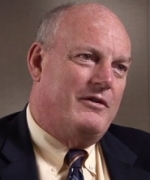
Learn how new procedures and new treatment facilities are greatly benefiting service members with brain injury.
Produced by Noel Gunther, Ashley Gilleland, and Brain King, BrainLine.
David A. Hovda, PhD is the director of the UCLA Brain Injury Research Center. He is past president of the National Neurotrauma Society and past president of the International Neurotrauma Society. He has served as chair of study sections for the National Institute for Neurological Disease and Stroke (NINDS).
The contents of Brainline Military (the “Web Site”), such as text, graphics, images, information obtained from the Web Site’s licensors and/or consultants, and other material contained on the Web Site (collectively, the “Content”) are for informational purposes only. The Content is not intended to be a substitute for medical, legal, or other professional advice, diagnosis, or treatment.
Specifically, with regards to medical issues, always seek the advice of your physician or other qualified health provider with any questions you may have regarding a medical condition. Never disregard professional medical advice or delay in seeking it because of something you have read on the Web Site. If you think you may have a medical emergency, call your doctor or 911 immediately. The Web Site does not recommend or endorse any specific tests, physicians, products, procedures, opinions, or other information that may be mentioned on the Web Site. Reliance on any information provided by the Web Site or by employees, volunteers or contractors or others associated with the Web Site and/or other visitors to the Web Site is solely at your own risk.